Zwinger Excursion
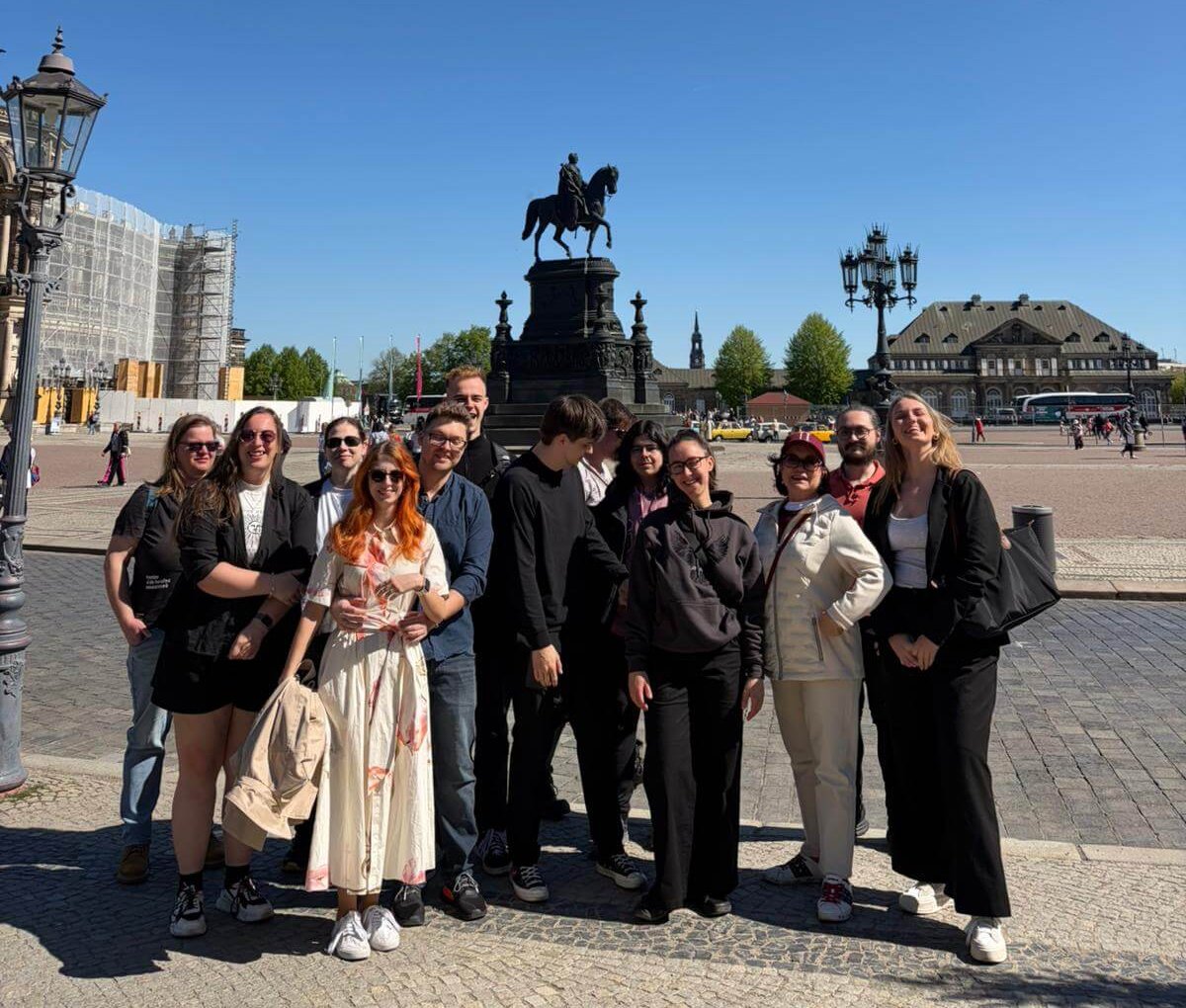
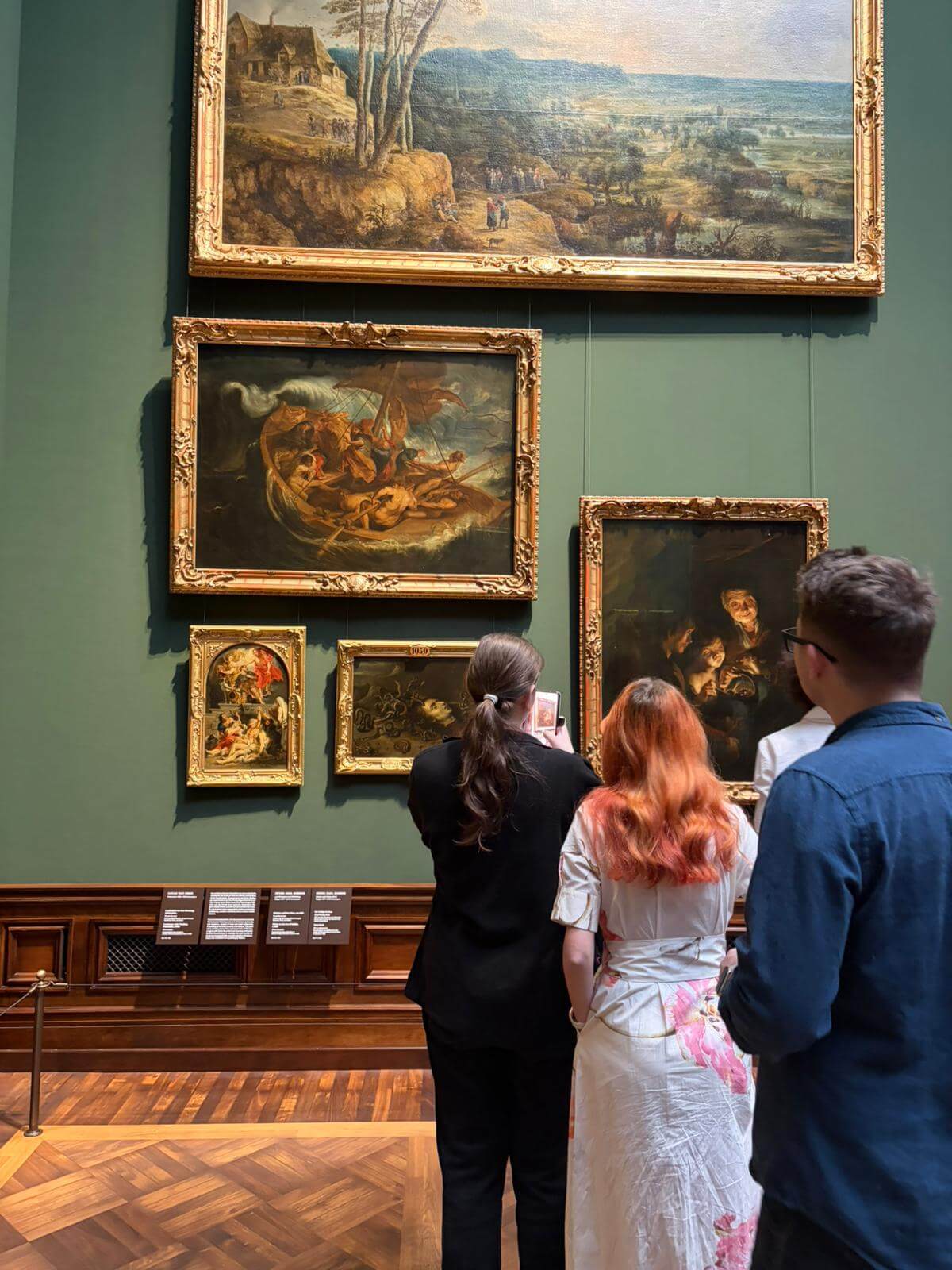
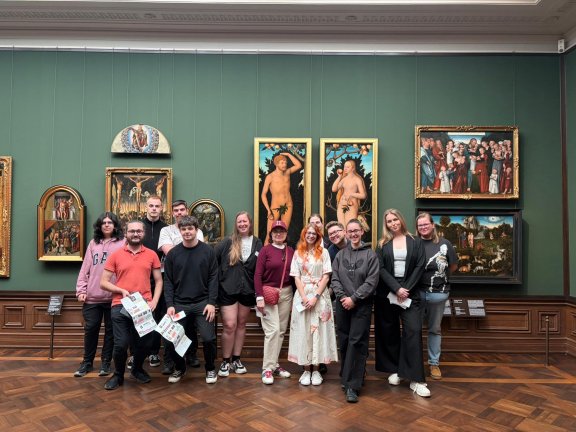
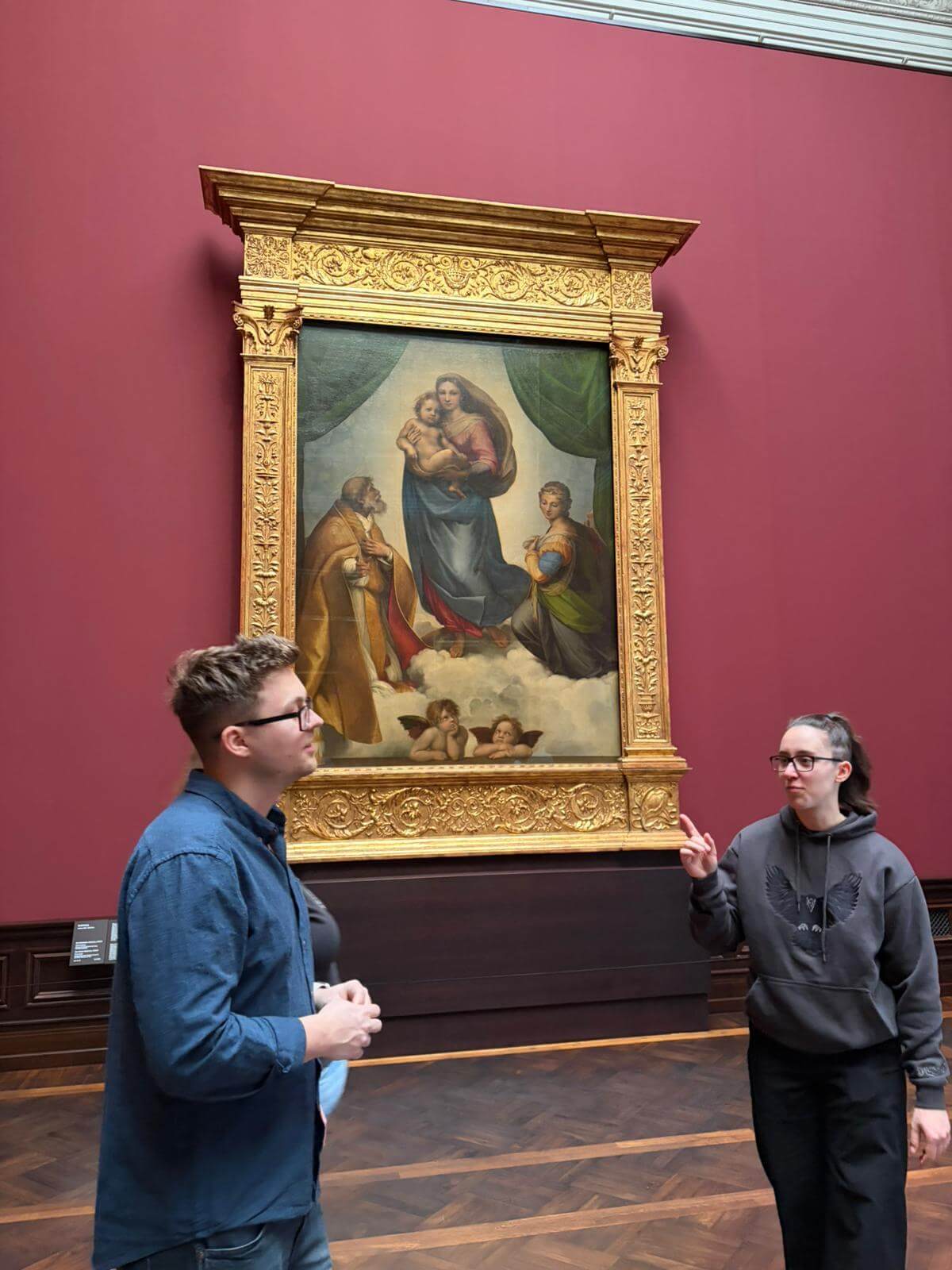
On the 1st of May 2026, 13 students of the 1st year of the master’s programme gathered in Dresden to witness masterpieces of European visual art. The excursion was based on the project realised within classes of methodology given by doc. N. Orlova. Among other outstanding artworks, the students appreciated Lucas Cranach’s depictions of Old Testament stories, Rubens’s way of conveying soft, feminine beauty, Raphael’s magnificent canvas of the Sistine Madonna, Vermeer’s calm snapshots of everyday life. Overall, the morning and afternoon spent in Zwinger proved to be excellent food for thought and a great inspiration for future team buildings and teaching.
One of the students taking part wrote a short essay reflecting on the experience.
13 FUTURE MASTERS IN OLD MASTERS GALLERY.
On the sunlit morning of the 1st of May, the group of 13 students of the English master’s programme gathered in the soothing shade of Zwinger in the centre of Dresden, waiting. What they were after was not poured into glasses and distributed through the hands of waiters springing back and forth, nor was it found in the soothing spray of fountains, between the shade of baroque buildings thinned by steps of thousands of curious feet or among crows and cranes scavenging notes falling off a buskin man’s guitar. No, they came to enjoy the soul-nourishing quality of great masterpieces of European visual art, time-travelling from an unimaginable past on a gentle spring day breeze.
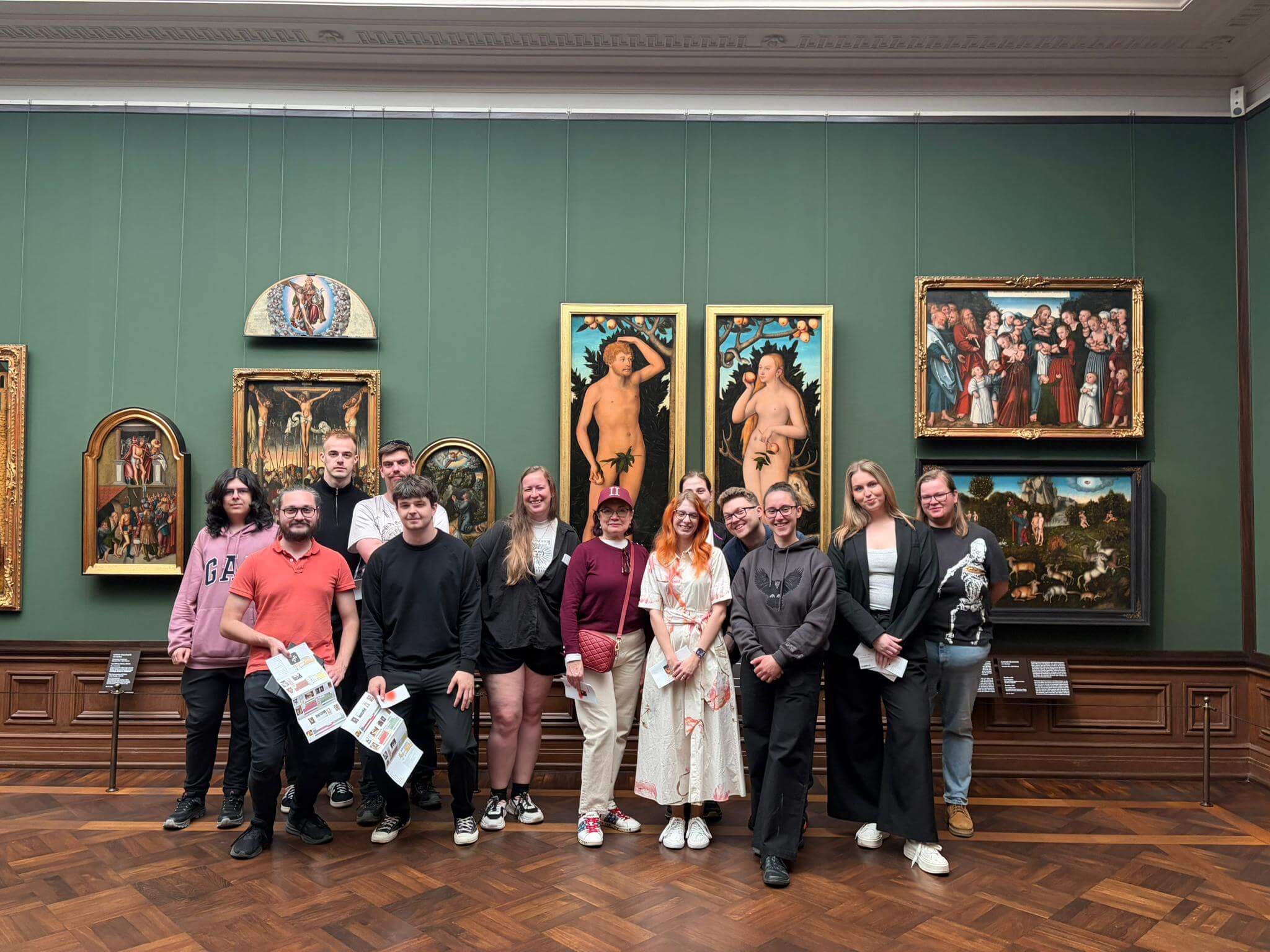
To enter the first exhibition of Cranach was to step into the Old Testament, with the characters averting gaze from the intruders, caught in between two breaths by the author. Further down the first floor, the collection of Canalettos offered still moments of life in Dresden, Pirna and Venice. Upon descending the steps, one could find oneself surrounded by giant canvases of Antique heroes, depicting snippets of their struggles, the dynamic golden light breaking apart on their emotion-ridden faces. Raphael’s the Sistine Madonna with her baby boy watched the museum-goers with cautious, frightened eyes, as if she knew something the cupids around her did not, and the boy clung to her in silent reminder that behind all great men stands a mother. In the Flemish art exhibition, placed on the dim margin of the museum’s main hall, budded in humble canvases, knot holes offering a peek through the ever-growing fence of time. Insects crawling between petals, fresh air crisping the cheeks of a girl reading a letter, the hand of a man grabbing the working girl, not knowing the all-seeing eye of an artist saw his immorality, a bid for a sinful gold coin. Finally, the ground floor enveloped the art-saturated students in the sights of smooth marble, Greek-perfect figures, humble ladies trying to collect the togas that had fallen off their shoulders in a moment of inattention, and their polar opposites proudly showing off their bare bodies, not afraid of being persecuted for being born naked.
By the time the last couple of students emerged into the hot afternoon air, their heads hung backwards, and their eyes sought the sky. What is the legacy we leave behind? Who is going to remember our names in five hundred years? Are there Cranachs, Holbeins, Vermeers, Rembrandts in our classes? What can we do to instil the same fire that consumed the artists into the hearts of the students at school desks in front of us? For that, we need to become paintings too and patiently wait for the tides of time to reveal the answer.
Helena Hojdíková